
Cat Personality Types: Which One Is Your Cat?
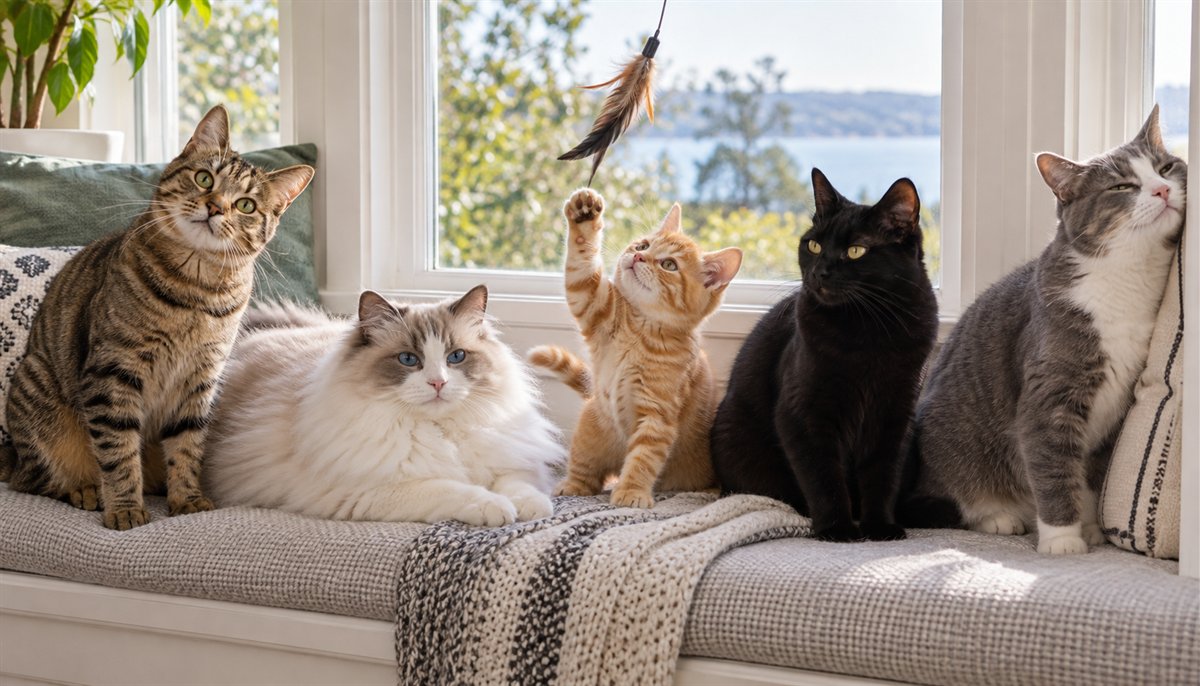
Every cat owner is quietly convinced their cat is one of a kind — the fearless explorer, the nervous shadow-dweller, the affectionate lap-loafer, the tiny household dictator. It turns out we're not just spoiling them with stories. Researchers have measured feline temperament across thousands of cats, and the personality patterns that emerge are real, consistent, and closer to human personality than most people expect. Here's what the science actually says about cat personality types, what shapes your cat's, and how to figure out which one is currently ignoring you from across the room.
Is "cat personality" even a real thing?
For years, scientists were cautious about applying the word "personality" to animals — it sounded like wishful thinking from besotted owners. The data didn't cooperate with that caution. Cats show consistent individual differences in how they react to people, other animals and new situations across time and settings, which is essentially the scientific definition of personality. A bold cat tends to stay bold at the vet as well as at home; a timid one stays timid. That consistency is exactly what lets researchers measure "types" in the first place.
The clearest map to date comes from a study called "The Feline Five," published in PLOS ONE in 2017 by a team at the University of South Australia. They asked owners of more than 2,800 cats across Australia and New Zealand to rate their cats on 52 personality traits — and when the answers were crunched, five broad factors fell out. Strikingly, they line up neatly with the human "Big Five" personality model, which is why the framework feels so intuitive.
The building blocks: the Feline Five
Before the recognizable "types," it helps to know the dimensions underneath them — the five dials every cat is set somewhere along. Your cat isn't one factor; they're a unique blend of all five.
The five core personality factors
Neuroticism — insecurity, anxiousness, shyness and fear of people. High-scorers are the hiders and the easily-startled.
Extraversion — how active, curious, inventive and switched-on a cat is. High-scorers are the busy explorers who investigate everything.
Dominance — assertiveness and pushiness toward other cats, including bullying the resident housemates.
Impulsiveness — erratic, reckless, unpredictable behavior. High-scorers can seem "wired" or reactive.
Agreeableness — affectionateness, friendliness to people and gentleness. High-scorers are the cuddlers and the easygoing companions.
Because every cat sits somewhere on all five dials, no two cats feel identical even when they share a "type." Think of the types below as popular combinations of these factors, not rigid boxes.
The five cat personality types you'll actually recognize
Translate the Feline Five into everyday living-room behavior and a handful of familiar characters emerge. These aren't official diagnostic categories — they're the common blends of the underlying factors, described in plain language so you can spot your cat.
😺 The Social Butterfly
High agreeableness, high extraversion. Meets you at the door, supervises your every move, and greets guests instead of hiding from them. Loves lap time, play and company — the cat that shatters the "aloof feline" stereotype.
Often thrives with: busy, sociable households and homes where someone's usually around.
🐾 The Curious Explorer
High extraversion, moderate impulsiveness. Into everything — open cupboards, high shelves, the one box you just emptied. Smart, inventive and easily bored, this cat needs mental stimulation or it will invent its own (usually at 3 a.m.).
Thrives with: puzzle feeders, climbing shelves and rotating toys to keep the busy brain occupied.
🫣 The Sensitive Soul
High neuroticism. Startles easily, hides from visitors, and needs time and a predictable routine to feel safe. Often the most misunderstood cat — not "unfriendly," just cautious — and the one that blossoms most with patience, hiding spots and gentle, low-pressure interaction.
Thrives with: calm, quiet homes, vertical hiding spots and owners who let the cat set the pace.
👑 The Boss Cat
High dominance. Confident, opinionated and clear about who runs the household. May guard favorite spots, food or people, and can be pushy with other pets. With enough resources to go around, that self-assurance settles into a calm, in-charge presence.
Thrives with: plenty of separate resources (bowls, litter boxes, perches) so there's nothing to fight over.
😻 The Mellow Companion
High agreeableness, low neuroticism, low impulsiveness. The easygoing old soul — unbothered by noise or change, happy to nap on the couch and roll with whatever the day brings. The "honestly the perfect cat" archetype.
Thrives with: just about anyone, including first-time owners, families and apartment life.
What actually shapes your cat's personality?
1. Genetics & the father's temperament
Boldness and friendliness are partly inherited — and research has found that a kitten's confidence with people is influenced by the father's temperament, even though kittens rarely meet their dads. Breed leans this way too: some lines trend chatty and clingy, others independent. It's a nudge, not a guarantee.
2. Early socialization
The sensitive window in kittens is roughly 2 to 7 weeks — even earlier than in dogs. Kittens gently handled by a variety of people during that stretch tend to grow into confident, people-friendly adults. Gaps in that early experience often show up later as shyness or fearfulness.
3. Environment & daily life
Personality isn't frozen. A predictable routine, enough vertical space, hiding spots, play and enrichment can measurably raise a cat's confidence and lower reactivity. A crowded or chaotic home can push the same cat the other way. What you provide every day is part of who your cat becomes.
4. Age & health
Kittens are still figuring themselves out, and many cats mellow with age. Crucially, a sudden shift in your cat's usual personality — new hiding, irritability, clinginess or aggression — can signal pain or illness rather than a mood, and is always worth a vet check.
How to spot your cat's type
You don't need a lab. Watch your cat in three everyday moments and the dials become obvious: a visitor arrives (greets them? watches from a shelf? vanishes under the bed?), a sudden noise (barely flicks an ear? bolts? investigates?), and a new object in the room (immediate inspection? cautious sniff from a distance? total avoidance?). Those three reactions map onto extraversion, neuroticism and impulsiveness — the factors that separate the types. Reading your cat's body language and tail talk makes the picture even sharper.
Frequently asked questions
How many cat personality types are there?
There's no single official number. The 2017 "Feline Five" study identified five underlying factors (Neuroticism, Extraversion, Dominance, Impulsiveness, Agreeableness) rather than fixed types. The recognizable "types" people talk about — the social butterfly, the explorer, the sensitive soul, the boss, the mellow companion — are common combinations of those five factors.
Does breed decide my cat's personality?
It influences tendencies but doesn't decide them. Some breeds lean chatty, active or lap-loving, but there's wide variation within every breed, and early handling, genetics and the father's temperament all shape the individual cat. A "cuddly breed" can produce an aloof cat, and vice versa.
Can I change my cat's personality?
You can't turn one type into another, but you can move the dials — especially confidence and reactivity — with patience, routine, enrichment and gentle handling. Shy and anxious cats often improve a lot with hiding spots, vertical space and low-pressure interaction.
My cat suddenly changed. Should I worry?
A sudden change in your cat's normal personality — new hiding, aggression, clinginess or withdrawal — can be a sign of pain, stress or illness and is worth a vet visit. This guide is for information and fun, not veterinary or behavioral diagnosis. For serious anxiety or aggression, talk to your vet or a certified cat behaviorist.