
The Complete New Puppy Checklist
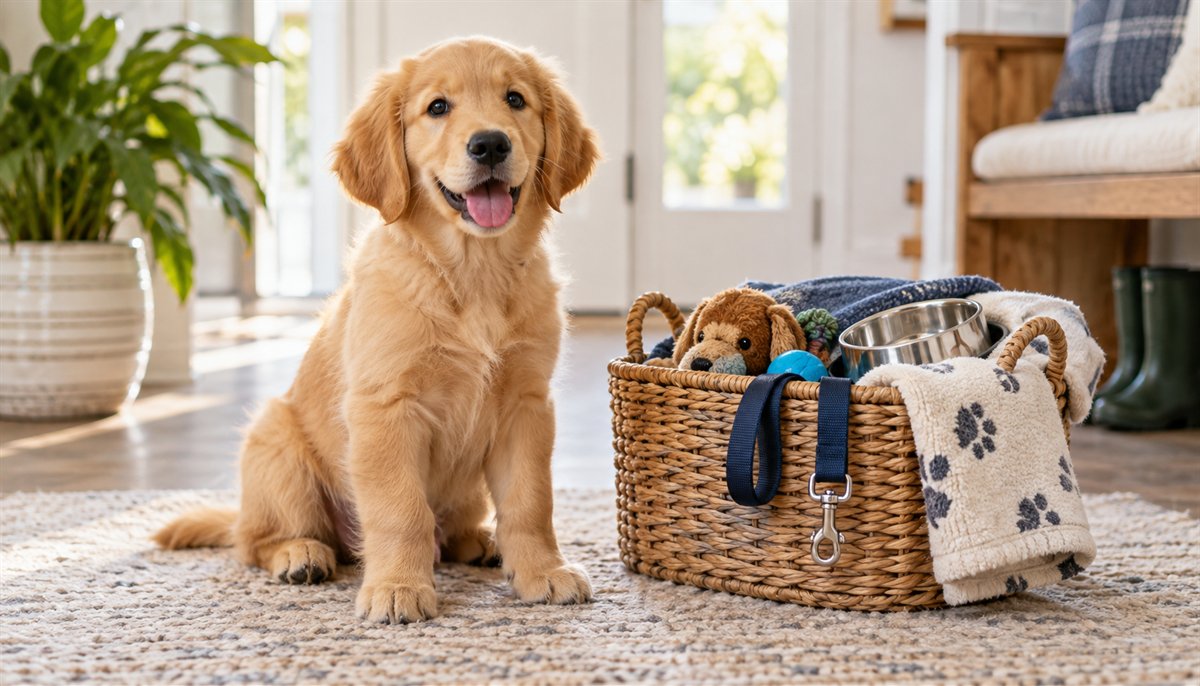
Bringing a puppy home is one of life's best days — and one of its most chaotic. The secret to a smooth first week isn't luck; it's having the right things ready before those paws hit the floor. Drawing on guidance from the AKC, the AVMA and practicing vets, here's the full checklist: what to buy, how to puppy-proof, what the first 24 hours should look like, and the food rules that keep a curious puppy out of the emergency room.
Before pickup: the shopping list
🛒 The essentials
- Crate — sized so an adult dog can stand and turn around, with a divider to shrink it while your puppy is small. It's a den, not a cage: most puppies sleep better in one from night one.
- Food and water bowls — stainless steel or ceramic; they're easier to sanitize than plastic and don't hold odors.
- Puppy food — the exact brand and formula your breeder or shelter has been feeding. Buy a small bag even if you plan to switch later.
- Collar, ID tag and leash — put the tag on day one. Puppies bolt through doors faster than anyone expects.
- Chew toys — at least three or four with different textures. A teething puppy will chew; your only vote is on what.
- Bedding you don't love — the first bed usually gets chewed or has accidents. Save the fancy one for month three.
- Enzymatic cleaner — regular cleaners hide accident smells from you but not from a puppy's nose, which invites repeat visits to the same spot.
- Puppy pads or a yard plan — decide your house-training route before day one so everyone in the house is consistent.
📋 The paperwork & planning
- Vet appointment — booked for the first week, even if the puppy looks perfectly healthy.
- Vaccine and deworming records — get everything the breeder or shelter has, in writing.
- Microchip registration — if chipped, transfer the registration to your name immediately. An unregistered chip finds nobody.
- A name — short, two syllables, easy to say happily. (Stuck? Our name generator is dangerously fun.)
- A budget check — food, vet visits, insurance and gear add up faster than most first-time owners expect. Run the numbers in two minutes with our pet cost calculator.
Puppy-proofing: think at nose height
Get on the floor — literally. What a puppy can reach, a puppy will taste. Vets and the AKC flag the same repeat offenders: electrical cords (tape them down or tube them), houseplants (many common ones are toxic), trash cans (get one with a locking lid), medications and bags left on low tables, shoes, socks and kids' toys (the classic intestinal-blockage surgery), and cleaning products behind unsecured cabinet doors.
The first 24 hours: less is more
Everyone wants to throw a welcome party. Your puppy wants the opposite. Day one should be quiet: a potty break the moment you arrive home (praise like they won a medal), a calm tour of one or two rooms — not the whole house — dinner in the crate or near it, and an early night. Expect crying the first night or two; a ticking clock, a warm (not hot) wrapped water bottle, or the crate beside your bed all help. What doesn't help is bringing the puppy into your bed "just tonight" if that's not the long-term plan — puppies learn the first rules fastest.
The first week: build the routine
🗓️ Week-one priorities
- Vet visit — a full exam, a fecal test, the vaccine schedule, and parasite prevention. Bring the breeder's records and a stool sample if you can.
- Potty routine — out after every meal, every nap, every play session, and roughly every 1–2 hours in between. A consistent door and a consistent spot speed everything up.
- Crate = good things — feed meals in the crate, toss treats in randomly, and never use it as punishment.
- Name game — say the name, reward the head turn. Ten times a day, and by Friday you have a puppy that whips around on cue.
- Alone-time practice — short, boring departures from day two or three (two minutes, then five, then ten) prevent separation issues later.
- Handling practice — touch paws, ears and mouth gently every day and pair it with treats. Your future groomer and vet will thank you.
Feeding a new puppy: the three rules
Rule one: don't switch food abruptly. Keep the breeder's or shelter's food for at least the first week, then transition over 7–10 days by mixing increasing amounts of the new food. A sudden switch plus moving-day stress is the number-one cause of new-puppy diarrhea. Rule two: puppies eat more often than adult dogs — typically three to four small meals a day until around six months. Rule three: treats count. Keep them under about 10% of daily calories, and stick to genuinely safe ones — a bit of carrot, a couple of blueberries, or plain cooked chicken beat anything from your plate. Not sure about a food? Check it in seconds before it leaves your hand.
Frequently asked questions
When can my puppy go outside for walks?
Full walks in public areas should wait until about 1–2 weeks after the final puppy vaccination (usually around 16 weeks). Before that, your own yard, carried outings and puppy classes that require vaccines are the safe middle ground — full isolation is no longer recommended.
How long can a puppy hold its bladder?
A rough rule: their age in months, in hours — so a two-month-old manages about two hours, at most. Overnight stretches come a little sooner because the body slows down, but plan on one nighttime potty trip in the early weeks.
Should I get pet insurance right away?
If you're going to get it, the first weeks are the best time — premiums are lowest and nothing is yet a "pre-existing condition." Compare it against the numbers from our cost calculator and decide with your eyes open. (For information only — not financial or veterinary advice.)
How big will my puppy get?
Breed, sex and current weight give a decent estimate — our puppy weight predictor does the math for you, which also helps you buy the right crate and harness sizes.
This guide is for information only — not veterinary advice. Always consult your vet about your puppy's specific health, feeding and vaccination plan.