
Dog Personality Types: Which One Is Your Dog?
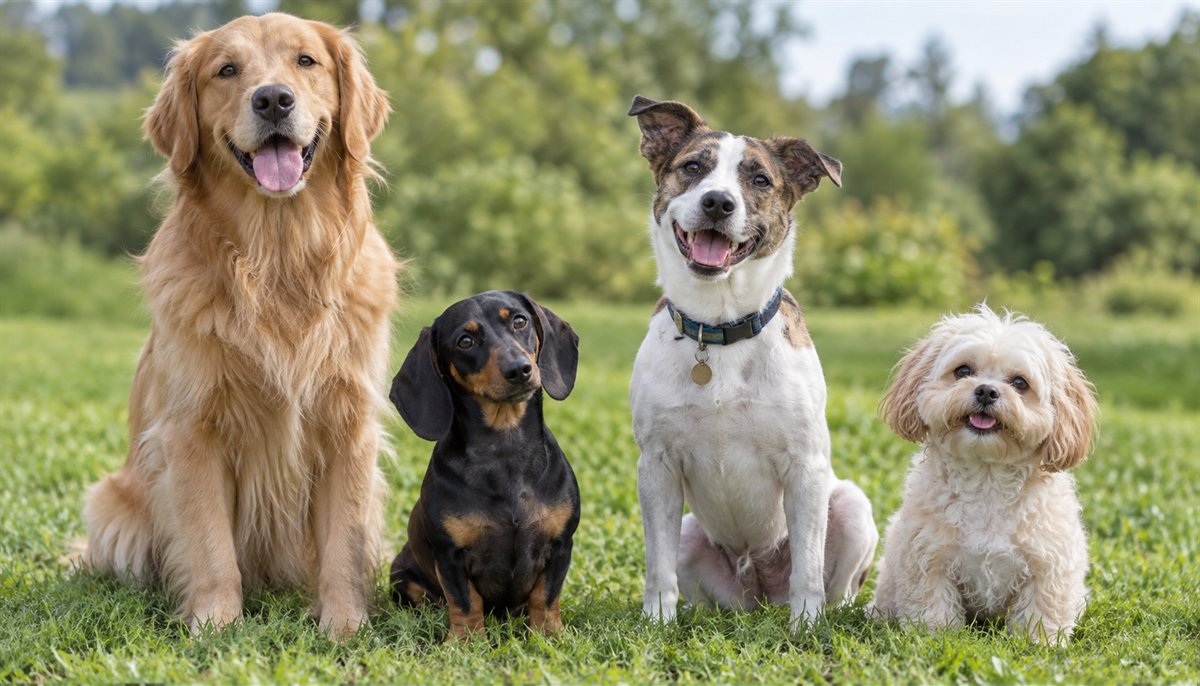
Every dog owner secretly believes their dog has a one-of-a-kind personality — the goofball, the worrier, the velcro shadow, the unbothered old soul. Turns out we're not just projecting. Scientists have spent decades measuring canine temperament, and the picture that emerges is real, consistent, and surprisingly close to how personality works in people. Here's what the research actually says about dog personality types, what shapes your dog's, and how to figure out which one is snoring on your couch right now.
Is "dog personality" even a real thing?
For a long time, scientists were wary of the word "personality" for animals — it sounded like wishful anthropomorphism. That skepticism didn't survive the data. A 2013 meta-analysis in PLOS ONE pooled dozens of studies and found that dogs show consistent individual differences in behavior across time and situations — which is essentially the scientific definition of personality. A dog that's bold at the park tends to be bold at the vet; a cautious dog stays cautious. That consistency is what lets researchers measure "types" at all.
The most widely used measuring stick is the C-BARQ (Canine Behavioral Assessment and Research Questionnaire), developed at the University of Pennsylvania. It's a 100-question survey owners fill out about how their dog reacts to everyday situations, and it has been completed for tens of thousands of dogs — the same database behind much of the research below.
The building blocks: personality dimensions
Before the "types," researchers first identified the dimensions that make them up — the dials every dog is set somewhere along. An influential expert review boiled canine personality down to roughly seven recurring traits:
The core temperament dials
Sociability — how much your dog seeks out people and other dogs.
Activity / energy — go-go-go versus happy to lounge.
Fearfulness — how easily new things, noises or strangers rattle them.
Reactivity — how strongly they respond to sudden stimuli.
Responsiveness to training — focus and willingness to work with you.
Aggression — the threshold for growling, guarding or snapping.
Submission — how readily they defer to people and other dogs.
Your dog is a unique blend of all seven, which is exactly why no two dogs feel the same even when they share a "type." Think of the types below as popular combinations, not rigid boxes.
The five science-backed dog personality types
In 2024, a team at the University of East London published a study in Scientific Reports that fed C-BARQ data from more than 70,000 dogs into machine-learning models. Rather than starting with human labels, they let the patterns in the data sort themselves — and five clear clusters fell out. Here they are, translated from research-speak into something you can actually recognize.
🐕 The Calm/Agreeable
Easygoing, steady, unbothered. This dog takes new people, noises and routines in stride, gets along with other dogs, and rarely overreacts. The "good boy" archetype — the one people describe as "honestly the perfect dog."
Often thrives with: first-time owners, families, apartment life.
🎾 The Excitable/Hyperattached
Bouncy, affectionate, and very into you. Big greetings, follows you room to room, may struggle when left alone. Endless love and energy — with a side of "please don't leave me."
Thrives with: active owners who love engagement; benefits from structure and independence-building.
🫣 The Anxious/Fearful
Sensitive and cautious. Startles at loud sounds, hangs back from strangers, needs time to warm up. Often the most misunderstood type — and the one that blossoms most with patience and gentle, positive training.
Thrives with: calm, predictable homes and owners who go at the dog's pace.
🦴 The Aloof/Predatory
Independent, self-possessed, and switched-on to movement — squirrels, bikes, blowing leaves. Affectionate on their own terms rather than clingy. Often bright and driven, with a strong "chase" instinct that channels beautifully into games and jobs.
Thrives with: owners who provide outlets for the prey drive (fetch, flirt poles, scent work).
🛡️ The Reactive/Assertive
Confident, opinionated, quick to respond. Alert to their environment and not shy about voicing it. With clear leadership and consistent training, that intensity becomes focus — these are often the sharp, capable dogs that excel at sports and work.
Thrives with: experienced owners who offer firm-but-kind structure and plenty of mental work.
What actually shapes your dog's personality?
1. Genetics & breed (a nudge, not a rule)
Breed influences the odds — a Border Collie leans toward energy and drive, a Basset toward mellow. But research consistently finds enormous variation within every breed. Breed is a helpful hint about your dog's tendencies, not a personality guarantee.
2. Early socialization
The window from roughly 3 to 14 weeks is huge. Puppies gently exposed to lots of people, places, sounds and surfaces tend to grow into more confident, adaptable adults. Gaps in that early experience often show up later as fearfulness.
3. Training & daily life
Personality isn't frozen. Positive-reinforcement training, enrichment and predictable routines can measurably raise a dog's confidence and lower reactivity over time. What you do every day is part of who your dog becomes.
4. Age
Puppies and adolescents are still figuring themselves out (that wild "teenage" phase is real). Core temperament settles as dogs mature, and many seniors mellow noticeably. Personality is stable — but never totally fixed.
How to spot your dog's type
You don't need a lab. Watch your dog in three everyday moments and you'll see the dials clearly: meeting a stranger (bounds over? hangs back? indifferent?), a sudden noise (barely notices? bolts? barks and investigates?), and being left alone (naps happily? paces and whines?). Those three reactions map neatly onto sociability, fearfulness/reactivity and attachment — the traits that separate the five types. Reading your dog's body language makes the picture even sharper.
Frequently asked questions
How many dog personality types are there?
There's no single official number. The 2024 Scientific Reports study grouped 70,000+ dogs into five types (Calm/Agreeable, Excitable/Hyperattached, Anxious/Fearful, Aloof/Predatory, Reactive/Assertive). Other researchers prefer describing personality along dimensions like sociability and fearfulness rather than fixed types.
Does breed decide my dog's personality?
It influences tendencies but doesn't decide them. There's huge variation within every breed, and genetics, early socialization, training and experience all shape the individual dog. A "calm breed" can produce a livewire, and vice versa.
Can I change my dog's personality?
You can't turn one type into another, but you can absolutely shift the dials — especially confidence and reactivity — with patient, reward-based training, socialization and enrichment. Fearful and reactive dogs often improve dramatically with the right support.
My dog seems like two types at once. Is that normal?
Completely. Most dogs are a blend and sit between clusters. The types describe common combinations of underlying traits, not exclusive boxes. This guide is for information and fun — not veterinary or behavioral diagnosis. For serious anxiety or aggression, talk to your vet or a certified behaviorist.