
25 Fun Facts About Dogs That Will Make You Love Them Even More
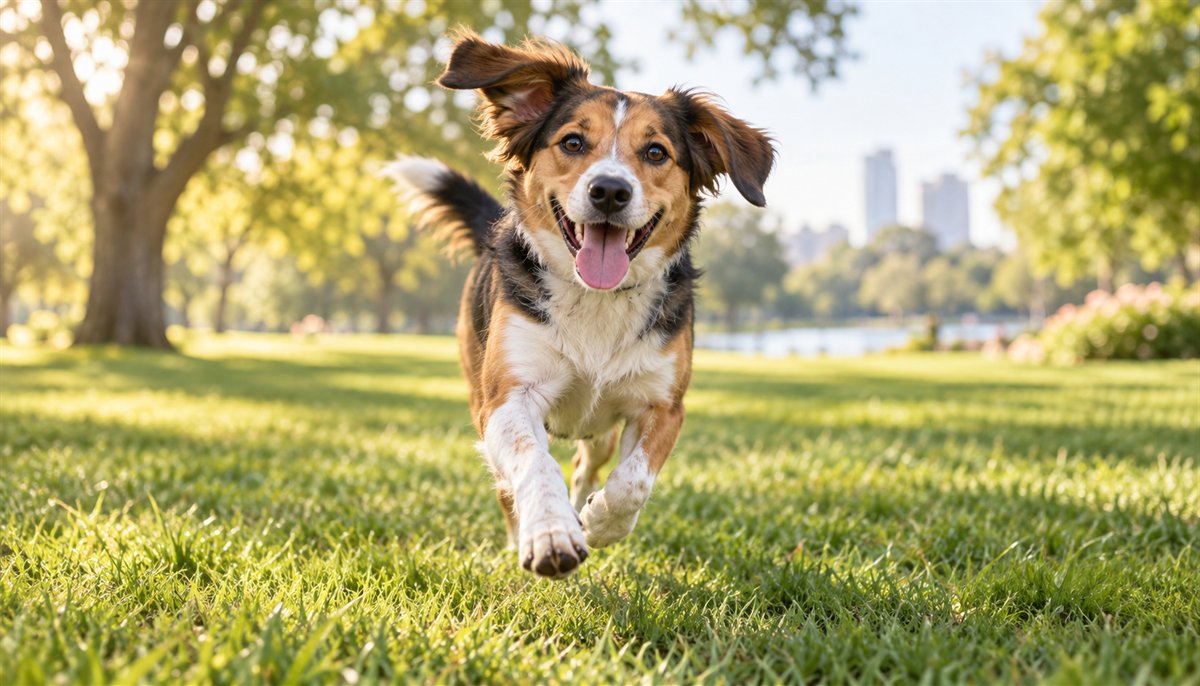
You share your couch, your schedule and possibly your bed with a dog — but how well do you actually know the animal snoring next to you? Dogs are stranger and more wonderful than most of us realize: they smell in stereo, dream in puppy-speak, and have been reading human faces for thousands of years. Here are 25 favorite facts, drawn from the American Kennel Club, veterinary sources and published research, sorted into the nose, the body, the brain and the history you two share.
The nose knows: smell & senses (facts 1–7)
1. Your dog's nose print is as unique as your fingerprint
The ridges and creases on a dog's nose form a pattern unique to each individual — so distinctive that nose prints have been used to identify dogs, and companies are developing nose-print ID apps.
2. Dogs smell in stereo
Each nostril samples the air separately, which helps a dog work out which direction a smell is coming from — like ears triangulating a sound.
3. Their sense of smell is 10,000 to 100,000 times better than ours
Dogs have up to 300 million scent receptors (we have about 6 million), plus a brain region for analyzing smells that's proportionally about 40 times larger than ours. Trained dogs can detect certain cancers, low blood sugar and oncoming seizures.
4. Dogs can "smell time"
As scents fade through the day, dogs read those changes like a clock. It's one theory for how your dog knows when you're due home: the trace of your smell has weakened to its "5 o'clock" level.
5. That wet nose is a scent tool
A thin layer of moisture helps capture scent chemicals from the air. Dogs also lick their noses to "taste" smells, sending samples to a special organ on the roof of the mouth.
6. Dogs aren't colorblind — they just see fewer colors
Dogs see the world mostly in blues and yellows; reds and greens look brownish-gray. That's why a red ball on green grass is weirdly hard for them to spot, but a blue toy is easy.
7. They hear frequencies we can't
Dogs hear up to roughly 45,000–65,000 Hz (humans top out near 20,000), which is why your dog reacts to "silent" dog whistles — and knows the car is yours a block away.
Built different: the body (facts 8–14)
8. Dogs "sweat" mainly through their paws
Their few sweat glands are concentrated in the paw pads; panting does most of the cooling. It's why hot days are riskier for dogs than they look — see our summer pet safety guide.
9. Sighthounds are the second-fastest land animals over a sprint
Greyhounds can hit about 45 mph (72 km/h) — behind only the cheetah for a short dash — and can keep near-top speed longer than a cheetah can.
10. Puppies are born deaf, blind and toothless
Eyes and ear canals open at around two weeks. What newborn puppies do have from day one: a working sense of smell and touch, which is how they find mom.
11. Dogs have a third eyelid
A membrane in the inner corner of the eye sweeps across to clean and protect it. You'll sometimes glimpse it when your dog is very sleepy.
12. Whiskers are sensory antennae
Dog whiskers detect tiny air currents and nearby objects, helping dogs navigate in the dark. That's one reason groomers shouldn't trim them.
13. Ear muscles galore
Dogs have around 18 muscles per ear, letting them tilt, rotate and swivel to pinpoint sounds — and to give you those devastatingly expressive looks.
14. The Basenji doesn't bark — it yodels
This ancient African breed has an unusually shaped larynx and produces a sound called a "barroo" instead of a standard bark.
Big feelings, busy brains (facts 15–20)
15. Dogs dream — probably about you
Dogs show the same REM sleep patterns humans do, and researchers believe they replay daily experiences: walks, play and their favorite people. Those twitching paws are likely dream-running.
16. The average dog understands about 89 words
A 2021 study found pet dogs respond to 89 words and phrases on average — and super-learners like Border Collies can learn the names of dozens (in rare cases, over 1,000) of toys.
17. Tail wags have a "left and right" language
Research suggests dogs wag more to the right when they feel positive and more to the left when uneasy — and other dogs pick up on the difference. Height and speed matter too; our dog body language guide decodes the whole system.
18. The head tilt may help them hear — and see — you better
Tilting may help dogs localize sounds and see past their muzzle to read your face. Studies also link frequent head-tilting to attentive, word-learning dogs. Either way, it works on us every time.
19. Yawns are contagious — from you to your dog
Dogs "catch" human yawns, and some studies find they catch them more from their owners than from strangers — a possible sign of empathy.
20. Zoomies have a scientific name
Those sudden racetrack sprints are FRAPs — Frenetic Random Activity Periods — a normal, healthy release of pent-up energy, most common in puppies and after baths.
A very old friendship (facts 21–25)
21. Dogs were our first domesticated animal
Dogs partnered with humans at least 14,000–15,000 years ago (some evidence suggests much earlier) — before sheep, cows or cats, and before agriculture itself.
22. Eye contact triggers a "love hormone" loop
When dogs and their humans gaze at each other, both get a boost of oxytocin — the same bonding hormone in parent-infant gazing. Dogs are among the very few animals that deliberately seek out human eye contact.
23. Dogs evolved "puppy-dog eyes" for us
Compared with wolves, dogs have an extra eyebrow-raising muscle that makes their faces more expressive and infant-like — a feature that likely evolved because it works on humans.
24. Spinning before lying down is ancient bedding behavior
Wild canids circled to flatten grass, check for critters and settle facing the wind. Your dog does it on a $90 orthopedic bed anyway. Tradition is tradition.
25. Three dogs survived the Titanic
Two Pomeranians and a Pekingese made it into lifeboats with their owners in 1912 — small enough to be carried aboard, and now a permanent piece of pup trivia.
Frequently asked questions
Do dogs really dream about their owners?
Very likely. Dogs show human-like REM sleep, and sleep researchers believe they replay daily experiences — which for most pet dogs are dominated by their people. Twitching paws, soft woofs and eye movement during sleep are normal signs of dreaming.
How many words can a dog learn?
The average pet dog responds to about 89 words and phrases, according to a 2021 study. Highly trained dogs — especially Border Collies — have learned the names of dozens to over 1,000 objects. Most dogs can keep learning new words their whole lives.
Is it true dogs only see black and white?
No — that's a myth. Dogs have two types of color receptors (humans have three), so they see blues and yellows well but can't distinguish reds and greens, which appear brownish or gray to them.
Why does my dog spin in circles before lying down?
It's inherited nesting behavior from wild ancestors, who circled to flatten vegetation, check for pests and position themselves safely. Occasional circling is completely normal; constant, compulsive circling that never settles is worth mentioning to your vet.
Can dogs really smell illness?
Trained detection dogs have identified certain cancers, low blood sugar in diabetics, and oncoming seizures by scent in controlled studies. Everyday pet dogs aren't diagnostic tools, but their noses genuinely pick up chemical changes in our bodies.
By the CanMyPet Editorial Team · Reviewed against guidance from the American Kennel Club (AKC), the ASPCA, veterinary sources and published research · Published July 2026.